The Power of B2B Digital Marketing
Business-to-Business (B2B) digital marketing has become a crucial strategy for companies looking to reach and engage with other businesses in today’s digital landscape. With the rise of online platforms and digital technologies, B2B marketing has evolved significantly, offering new opportunities for businesses to connect, communicate, and convert leads into customers.
Understanding B2B Digital Marketing
B2B digital marketing involves the use of various online channels and tactics to promote products or services to other businesses. Unlike Business-to-Consumer (B2C) marketing, B2B marketing focuses on building relationships, generating leads, and driving conversions within a business context.
The Benefits of B2B Digital Marketing
There are several key benefits to implementing a strong B2B digital marketing strategy:
- Increased Reach: Digital marketing allows businesses to reach a wider audience of potential clients through online channels such as search engines, social media, email marketing, and more.
- Targeted Advertising: With digital marketing tools, businesses can target specific industries, job titles, or company sizes to ensure their message reaches the right audience at the right time.
- Measurable Results: Digital marketing offers detailed analytics and reporting capabilities that allow businesses to track the performance of their campaigns in real-time and make data-driven decisions for future strategies.
- Cost-Effective: Compared to traditional marketing methods, digital marketing is often more cost-effective and provides a higher return on investment due to its ability to target specific audiences with precision.
Key Strategies for B2B Digital Marketing Success
To succeed in B2B digital marketing, businesses should consider implementing the following key strategies:
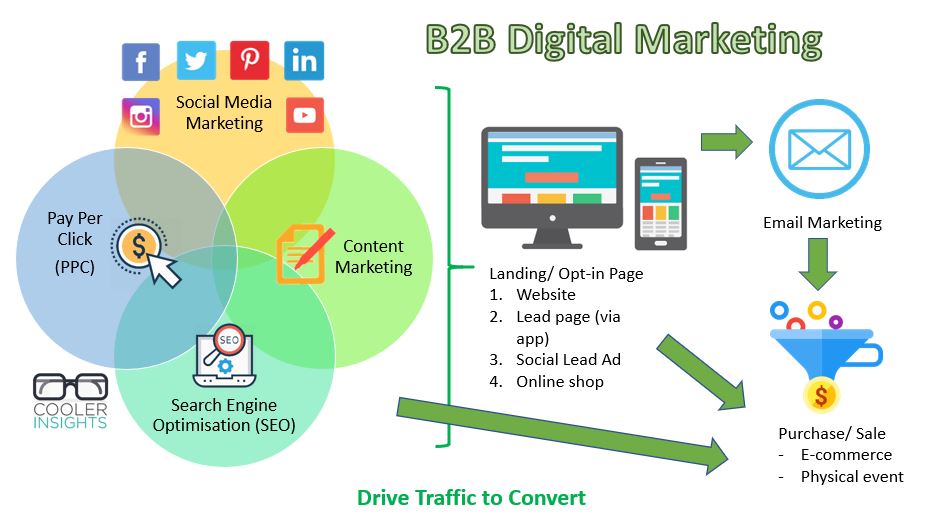
- Content Marketing: Creating valuable and relevant content that educates and engages potential clients is essential for building trust and credibility in the B2B space.
- Email Marketing: Utilising targeted email campaigns can help nurture leads through the sales funnel and drive conversions over time.
- Social Media Marketing: Engaging with business prospects on platforms like LinkedIn can help build relationships and establish thought leadership within your industry.
- Search Engine Optimization (SEO): Optimising your website for search engines can improve your visibility online and drive organic traffic from businesses searching for your products or services.
In conclusion, B2B digital marketing offers a wealth of opportunities for businesses to connect with other companies in meaningful ways. By leveraging the power of online channels and strategic tactics, businesses can enhance their brand presence, generate quality leads, and ultimately drive growth in today’s competitive marketplace.
Maximising B2B Success: The Advantages of Digital Marketing
- Increased reach to a wider audience of potential clients.
- Targeted advertising to specific industries, job titles, or company sizes.
- Measurable results through detailed analytics and reporting capabilities.
- Cost-effective compared to traditional marketing methods.
- Ability to track campaign performance in real-time for data-driven decisions.
- Higher return on investment due to precise audience targeting.
Navigating the Challenges of B2B Digital Marketing: Competition, Privacy, and Beyond
- 1. High Competition
- 2. Long Sales Cycles
- 3. Targeting Challenges
- 4. Data Privacy Concerns
- 5. Resource Intensive
- 6. Technology Dependency
Increased reach to a wider audience of potential clients.
One significant advantage of B2B digital marketing is the increased reach it offers to a broader audience of potential clients. Through various online channels such as search engines, social media platforms, email marketing, and more, businesses can expand their visibility and connect with a larger pool of prospective customers within their target market. This enhanced reach allows companies to engage with a diverse range of businesses, increase brand awareness, and ultimately drive more leads and conversions in the competitive digital landscape.
Targeted advertising to specific industries, job titles, or company sizes.
Targeted advertising in B2B digital marketing enables businesses to tailor their marketing messages to specific industries, job titles, or company sizes with precision and relevance. By focusing on these specific parameters, companies can ensure that their ads reach the most relevant audience, increasing the likelihood of engagement and conversion. This level of targeting not only improves the effectiveness of marketing campaigns but also allows businesses to allocate their resources efficiently, maximising the return on investment in their digital marketing efforts.
Measurable results through detailed analytics and reporting capabilities.
One significant advantage of B2B digital marketing is the ability to achieve measurable results through detailed analytics and reporting capabilities. By utilising digital marketing tools, businesses can track the performance of their campaigns in real-time, gaining valuable insights into key metrics such as website traffic, conversion rates, engagement levels, and more. This data-driven approach allows companies to make informed decisions, optimise their strategies based on what works best, and ultimately improve their overall marketing ROI. The ability to measure and analyse results effectively sets B2B digital marketing apart by providing businesses with the means to continuously refine and enhance their marketing efforts for greater success.
Cost-effective compared to traditional marketing methods.
One significant advantage of B2B digital marketing is its cost-effectiveness when compared to traditional marketing methods. By leveraging online channels and tools, businesses can reach their target audience more efficiently and at a lower cost. Digital marketing allows for precise targeting, measurement of results, and the ability to adjust strategies in real-time, all of which contribute to a higher return on investment. This cost-effective nature of digital marketing enables businesses to allocate their resources more strategically and achieve better outcomes within their budget constraints.
Ability to track campaign performance in real-time for data-driven decisions.
One significant advantage of B2B digital marketing is the ability to track campaign performance in real-time, enabling businesses to make data-driven decisions. By utilising analytics tools and monitoring key performance indicators, companies can gain valuable insights into the effectiveness of their marketing efforts. This real-time data allows businesses to adjust strategies promptly, optimise campaigns for better results, and allocate resources efficiently based on what is working best. Ultimately, the ability to track campaign performance in real-time empowers B2B marketers to make informed decisions that drive success and maximise ROI.
Higher return on investment due to precise audience targeting.
One significant advantage of B2B digital marketing is the higher return on investment it offers, primarily attributed to the ability to precisely target specific audience segments. By leveraging digital tools and data analytics, businesses can tailor their marketing campaigns to reach the right audience at the right time with relevant messaging. This targeted approach not only increases the likelihood of engaging potential clients but also maximises the efficiency of marketing spend, ultimately leading to a higher ROI compared to traditional marketing methods.
1. High Competition
In the realm of B2B digital marketing, one significant drawback is the high level of competition that businesses face. The competitive landscape in digital marketing can be intense, with numerous companies vying for the attention of the same target audience. This saturation of competitors can make it challenging for businesses to differentiate themselves and stand out effectively. As a result, businesses must invest additional resources in developing unique strategies and compelling content to cut through the noise and capture the attention of potential clients in a crowded marketplace.
2. Long Sales Cycles
In the realm of B2B digital marketing, one significant drawback is the presence of long sales cycles. Unlike in B2C marketing, B2B sales processes often involve intricate decision-making and multiple stakeholders, leading to prolonged and complex conversion journeys. This necessitates businesses to invest substantial time and resources in nurturing leads and maintaining consistent efforts throughout the extended sales cycle to successfully turn prospects into customers. The challenge lies in sustaining engagement and interest over an extended period, requiring strategic planning and patience to navigate through the complexities of B2B transactions.
3. Targeting Challenges
One significant challenge of B2B digital marketing is the difficulty in identifying and targeting the right decision-makers within businesses. This targeting challenge can result in lower conversion rates as messages may not reach the individuals with the authority to make purchasing decisions. Without precise targeting, marketing efforts may be less effective in generating leads and driving conversions within the B2B sector.
4. Data Privacy Concerns
In the realm of B2B digital marketing, one significant drawback is the growing issue of data privacy concerns. As businesses engage in more extensive data collection and utilise this information for targeted marketing purposes, they run the risk of infringing upon customer privacy rights and encountering regulatory hurdles. The heightened focus on data protection laws and regulations underscores the importance for businesses to navigate this delicate balance between leveraging customer data for marketing purposes while respecting individuals’ right to privacy.
5. Resource Intensive
Implementing effective B2B digital marketing strategies can be challenging due to their resource-intensive nature. Businesses investing in digital marketing need to allocate substantial time, expertise, and financial resources to achieve success in this competitive landscape. From creating engaging content to managing targeted advertising campaigns, the demands of B2B digital marketing can strain a company’s resources. Without the necessary investments in place, businesses may struggle to keep up with the ever-evolving digital marketing trends and may not fully harness the potential of online channels to reach and engage with other businesses effectively.
6. Technology Dependency
One significant drawback of B2B digital marketing is the reliance on technology, which can lead to a dependency on digital tools and platforms. Businesses that heavily rely on these digital resources are susceptible to technical issues or sudden changes in algorithms that can disrupt their marketing strategies. This vulnerability to technology-related challenges poses a risk to the consistency and effectiveness of their marketing efforts, highlighting the need for businesses to diversify their marketing channels and strategies to mitigate the impact of potential disruptions.