Mobile Digital Marketing: Reaching People Wherever They Are
Mobile digital marketing is the promotion of products and services through smartphones, tablets and other mobile devices. It brings together channels such as mobile-friendly websites, search, social media, email, apps, messaging and digital advertising.
For businesses, mobile marketing is no longer a separate consideration. People use their phones to discover brands, compare options, read reviews and make purchases. A well-planned mobile strategy helps businesses connect with customers throughout this journey — while respecting their preferences and privacy.
Why mobile marketing matters
Mobile devices are often close at hand, making them an important way for people to access information and services. This creates opportunities for businesses to reach audiences at useful moments, whether someone is searching for a nearby shop, watching a video or checking an email.
Mobile marketing can also make the customer experience more convenient. A clear mobile website, simple checkout process or relevant app notification can help people take action without unnecessary effort. However, frequent or poorly timed messages can be intrusive, so relevance and restraint matter.
Key mobile marketing channels
Mobile-friendly websites
A website should work smoothly on smaller screens. Text needs to be easy to read, buttons simple to tap and important information quick to find. Pages should also load promptly, as slow or awkward experiences can lead visitors to leave before taking action.
Responsive design allows a website to adapt to different screen sizes. Businesses should test pages on a range of devices and make essential tasks — such as contacting the company, finding a location or completing a purchase — straightforward.
Mobile search
Search engines are a common starting point for people looking for products, services and local businesses. Search marketing can include organic search optimisation as well as paid search advertising. Useful page content, clear titles and accurate business details can help people find relevant information.
For businesses serving specific areas, local search visibility is particularly valuable. Keeping opening hours, contact details and location information up to date helps customers decide whether a business meets their needs.
Social media and video
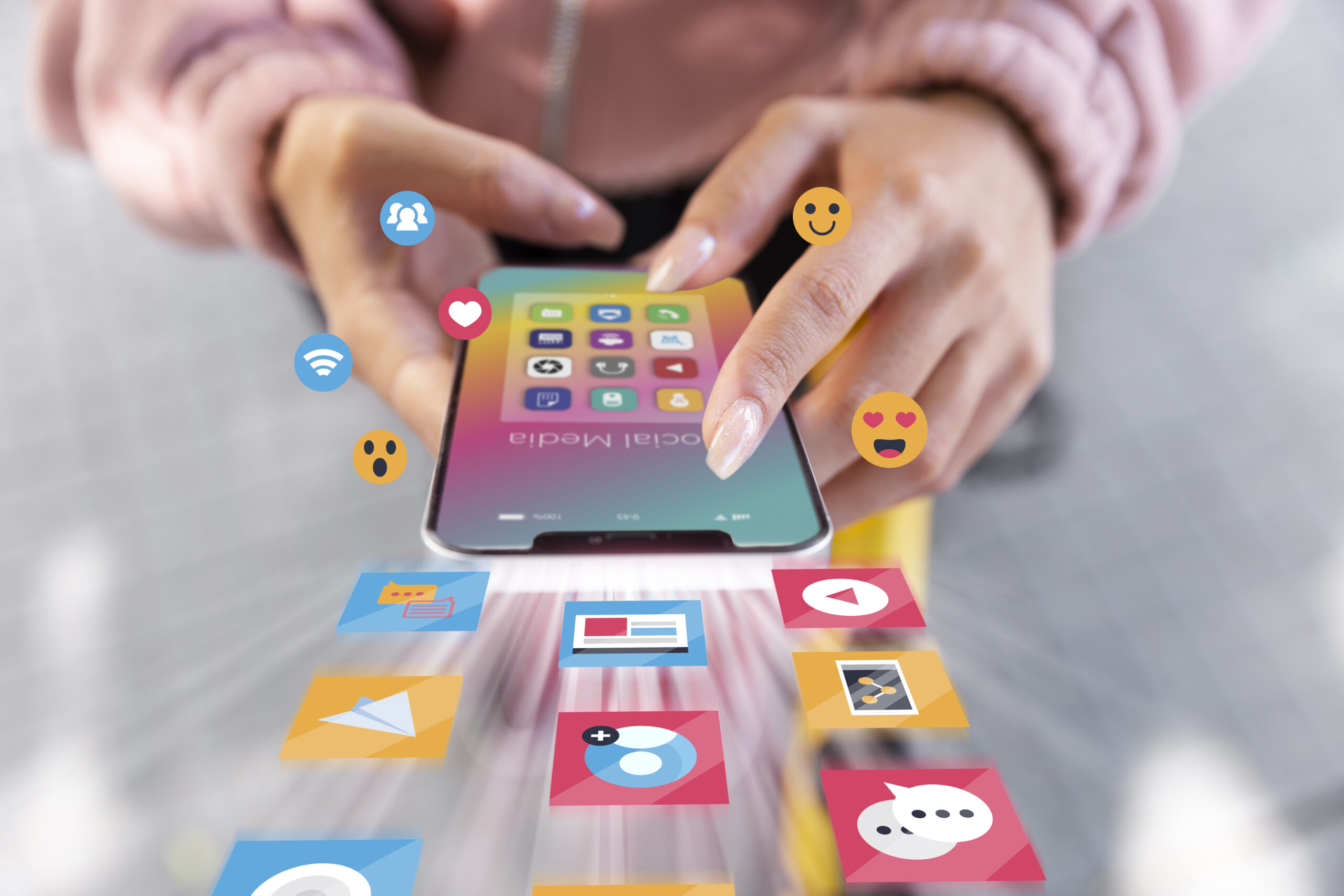
Social platforms are designed to be used on mobile devices, making them useful for sharing content, building a community and advertising to selected audiences. Short-form video, practical tips, product demonstrations and customer stories can all work well when they are designed for the way people use each platform.
Content should be easy to understand without sound where possible, with captions for video. It should also offer value rather than simply repeating sales messages.
Email and messaging
Email remains an effective channel when messages are useful, relevant and sent to people who have agreed to receive them. Mobile-friendly emails should use concise subject lines, readable text and clear links or buttons.
SMS and messaging services can be useful for time-sensitive updates, such as appointment reminders or delivery information. Because messages arrive directly on a personal device, businesses should obtain appropriate permission, explain what people are signing up for and make it easy to opt out.
Mobile apps and notifications
An app can offer useful features such as account management, booking, loyalty rewards or personalised recommendations. It is most valuable when it solves a genuine customer need; creating an app simply to have one may not justify the time and cost involved.
Push notifications can help users stay informed, but should be used sparingly. People should be able to choose whether to receive them and, where possible, select the types of updates they want.
How to build an effective mobile marketing strategy
- Understand your audience. Find out which devices and channels your customers use, what they need and where they encounter difficulties.
- Set clear objectives. Decide whether the priority is awareness, enquiries, sales, bookings, app engagement or customer retention.
- Make the experience mobile-first. Design key pages and journeys for smaller screens rather than treating mobile as an afterthought.
- Choose suitable channels. Focus on the channels that fit your audience, offer and resources. A smaller number of well-managed channels is often more effective than trying to use every option.
- Personalise responsibly. Use information people have willingly provided to make communications more relevant. Avoid collecting data that is not needed.
- Test and improve. Try different page layouts, messages and calls to action. Use the results to refine the experience rather than relying on assumptions.
Measuring results
Useful measures depend on the campaign’s objective. A business focused on awareness may look at reach, video views or brand searches. A business seeking sales may track conversions, revenue, cost per acquisition and checkout completion. For mobile websites, page speed, engagement and the completion rate for important tasks can reveal where improvements are needed.
Measurement should account for privacy settings and limitations in tracking. Where possible, combine aggregated analytics with direct feedback and sales data. The aim is to understand whether marketing is helping customers and contributing to business goals — not simply to collect more data.
Privacy, accessibility and trust
Responsible mobile marketing is transparent about how personal information is used. Businesses should follow applicable privacy and electronic marketing laws, obtain consent where required and provide clear ways to manage communication preferences.
Accessibility is equally important. Readable text, strong colour contrast, descriptive links, captions and controls that work with assistive technologies make mobile content easier to use for more people.
Conclusion
Mobile digital marketing works best when it puts the customer experience first. A fast, accessible website, relevant content and thoughtful communications can help a business earn attention and build lasting relationships. By choosing appropriate channels, respecting privacy and measuring meaningful outcomes, businesses can make mobile marketing a practical part of their wider digital strategy.
Exploring Mobile Digital Marketing: 24 Key FAQs Answered
- Can I start digital marketing on mobile?
- What type of marketing is mobile marketing?
- Is digital marketing possible in mobile?
- What are types of Mobile marketing?
- What is the difference between digital and mobile marketing?
- What are 7 types of digital marketing?
- What are the 3 types of digital marketing?
- Is mobile part of digital marketing?
- What are the 4 main mobile marketing tools?
- Will AI replace digital marketers?
- Is mobile marketing part of digital marketing?
- What is mobile digital marketing?
- What is Mobile marketing examples?
- What is mobile marketing in digital marketing?
- What are the objectives of mobile marketing in digital marketing?
- What is mobile digital?
- How do I do digital marketing on my phone?
- What is mobile digital advertising?
- What are 4 mobile marketing strategies?
- How do I start mobile marketing?
- How do you do Mobile marketing?
- What is mobile app digital marketing?
- Is mobile marketing same as digital marketing?
- What are the 5 types of mobile marketing?
Can I start digital marketing on mobile?
Yes, you can start digital marketing using a mobile phone. Many social media, email, design and analytics tools have mobile apps that let you create content, manage campaigns and check results on the go. Begin by choosing a channel that suits your audience, setting a clear goal and publishing useful, engaging content. A computer can make some tasks — such as detailed website editing or campaign analysis — easier, but it is not essential when you are getting started.
What type of marketing is mobile marketing?
Mobile marketing is a form of digital marketing that uses mobile devices, such as smartphones and tablets, to reach and engage audiences. It can include mobile-friendly websites, search and social media advertising, email, text messages, apps and push notifications. As part of a wider marketing strategy, it helps businesses share relevant information and offers with people while they browse, communicate or shop on their devices.
Is digital marketing possible in mobile?
Yes, digital marketing is possible on mobile devices and is an essential way for businesses to reach people who use smartphones and tablets to browse, shop and communicate. It includes mobile-friendly websites, search and social media advertising, email, apps, text messages and push notifications. For the best results, make content easy to view and use on a small screen, keep messages relevant, and obtain consent before sending marketing communications.
What are types of Mobile marketing?
Mobile marketing includes several channels and formats designed to reach people on their mobile devices. Common types include mobile-friendly websites and search advertising, social media and in-app adverts, email, SMS and messaging campaigns, mobile apps, push notifications, and location-based promotions. Businesses can also use mobile video, QR codes and mobile-optimised content to encourage engagement. The right mix depends on the audience, campaign goals and the permissions customers have given.
What is the difference between digital and mobile marketing?
Digital marketing is the broad term for promoting products or services through online channels, including websites, search engines, email and social media. Mobile marketing is a part of digital marketing focused specifically on reaching people through mobile devices such as smartphones and tablets. It includes activities such as mobile-friendly websites, in-app advertising, SMS campaigns and location-based promotions. In short, all mobile marketing is digital marketing, but not all digital marketing is designed specifically for mobile users.
What are 7 types of digital marketing?
The seven common types of digital marketing are search engine optimisation (SEO), which helps websites appear in organic search results; search engine marketing (SEM), including paid search adverts; social media marketing; content marketing, such as articles, videos and guides; email marketing; affiliate marketing, where partners promote products for commission; and mobile marketing, which reaches people through smartphones and tablets using channels such as mobile-friendly websites, apps, SMS and in-app advertising. These approaches often overlap, and the right mix depends on a business’s audience and goals.
What are the 3 types of digital marketing?
There is no single definitive way to group digital marketing, but a useful approach is to divide it into three types: owned media, paid media and earned media. Owned media includes channels a business controls, such as its website, blog and email list; paid media covers advertising, including search and social media ads; and earned media is exposure gained through others, such as customer reviews, recommendations and press coverage. A strong digital marketing strategy often combines all three.
Is mobile part of digital marketing?
Yes, mobile is an important part of digital marketing. It includes reaching and engaging people through smartphones and tablets using mobile-friendly websites, search, social media, email, apps, text messages and digital adverts. Because many people browse, research and shop on their phones, businesses should make sure their digital marketing is easy to use on mobile devices and tailored to their audience’s needs.
What are the 4 main mobile marketing tools?
The four main mobile marketing tools are mobile-friendly websites, mobile apps, SMS and messaging, and mobile advertising. A responsive website makes it easy for people to browse or buy on their phones, while an app can offer useful services and personalised features. SMS and messaging are suited to concise, timely updates for people who have agreed to receive them, and mobile advertising reaches audiences through channels such as search engines, social media and in-app placements. The best mix depends on your audience, objectives and the permissions you have to contact people.
Will AI replace digital marketers?
The question of whether AI will replace digital marketers is a topic of much debate. While AI is transforming the landscape of digital marketing by automating repetitive tasks, analysing large datasets, and providing insights into consumer behaviour, it is unlikely to fully replace human marketers. AI excels in processing data and identifying patterns at a scale and speed beyond human capability, but it lacks the creativity, strategic thinking, and nuanced understanding of human emotions that are essential in crafting effective marketing campaigns. Instead of replacing marketers, AI serves as a powerful tool that can enhance their capabilities by providing data-driven insights and freeing them from routine tasks. This allows marketers to focus more on strategy, creativity, and building genuine connections with their audience. Therefore, the future of digital marketing is likely to be a collaborative effort between human creativity and artificial intelligence.
Is mobile marketing part of digital marketing?
Yes, mobile marketing is an important part of digital marketing. It includes promotional activities designed for mobile devices, such as mobile-friendly websites, search and social media ads, email, SMS, apps and push notifications. These channels help businesses reach people on their smartphones and tablets as part of a wider digital marketing strategy.
What is mobile digital marketing?
Mobile digital marketing is the promotion of products or services through smartphones, tablets and other mobile devices. It includes channels such as mobile-friendly websites, search engines, social media, email, apps, text messages and mobile advertising. Its aim is to reach people with relevant, easy-to-use content and offers while they browse, communicate or shop on their devices.
What is Mobile marketing examples?
Mobile marketing examples include mobile-friendly websites, search adverts shown on smartphones, social media campaigns, app-based promotions, email newsletters designed for smaller screens, and SMS messages such as appointment reminders or special offers. Location-based adverts can also reach people near a particular shop or service. The best approach depends on the audience and should be relevant, easy to use and sent with the appropriate permission.
What is mobile marketing in digital marketing?
Mobile marketing is the use of digital channels to reach and engage people on smartphones, tablets and other mobile devices. It can include mobile-friendly websites, search and social media advertising, email, text messages, apps and push notifications. As part of a wider digital marketing strategy, it helps businesses share relevant content, promote products or services and make it easier for customers to take action while on the move.
What are the objectives of mobile marketing in digital marketing?
The objectives of mobile marketing are to reach people on the devices they use throughout the day, raise brand awareness and deliver relevant, timely information. It can also encourage customers to take specific actions, such as visiting a website, making a purchase, booking a service or downloading an app. By creating convenient, personalised experiences and building ongoing engagement, mobile marketing can support customer loyalty and contribute to wider business goals.
What is mobile digital?
Mobile digital refers to marketing, content and services designed for people using smartphones, tablets and other mobile devices. It includes mobile-friendly websites, apps, social media, search advertising, email and text messages. The aim is to make information and experiences easy to access on the move, with content that fits smaller screens and suits the needs of mobile users.
How do I do digital marketing on my phone?
You can do digital marketing on your phone by using mobile-friendly tools to plan and publish social media posts, create simple graphics or videos, send email campaigns, manage adverts and check website or campaign analytics. Start by choosing the channels your audience uses, then create useful content with clear calls to action and make sure any linked pages work well on a small screen. Many marketing platforms have mobile apps, but always preview your work before publishing, protect account log-ins and review results regularly so you can improve what is working.
What is mobile digital advertising?
Mobile digital advertising is the promotion of products, services or brands through adverts designed to reach people on smartphones and tablets. These adverts may appear on mobile websites, search engines, social media platforms, apps and video services. They can use formats such as banner ads, sponsored posts, short videos or in-app promotions, and are often tailored to a particular audience, location or context. Effective mobile advertising is relevant, easy to view and interact with on a small screen, and respects people’s privacy and consent.
What are 4 mobile marketing strategies?
Four effective mobile marketing strategies are creating a fast, mobile-friendly website; using mobile search and local SEO to help customers find your business; sharing engaging content and adverts on social media; and sending permission-based, relevant messages through email or SMS. Choose strategies that suit your audience, make every interaction easy to use on a phone, and measure results so you can improve your approach.
How do I start mobile marketing?
To start mobile marketing, first identify your audience and what you want to achieve, such as increasing enquiries, sales or repeat visits. Make sure your website is fast, easy to use on a phone and has clear next steps, then choose the channels your customers use most — such as mobile search, social media, email or SMS. Create useful, concise content, get permission before sending marketing messages, and make it easy for people to unsubscribe. Begin with a small campaign, track relevant results and use what you learn to improve.
How do you do Mobile marketing?
Mobile marketing starts with understanding your audience and setting a clear goal, such as increasing sales, bookings or brand awareness. Make your website and content easy to use on smartphones, then choose suitable channels such as mobile search, social media, email, apps or text messages. Create concise, relevant content, get permission before sending marketing communications and make it easy for people to manage their preferences. Finally, track results against your goal and use what you learn to improve your campaigns.
What is mobile app digital marketing?
Mobile app digital marketing is the use of digital channels and techniques to promote a mobile app, attract suitable users and encourage them to keep using it. It can include app store optimisation, paid advertising, social media campaigns, email marketing, influencer partnerships and in-app messages or offers. Effective app marketing focuses on reaching the right audience, clearly showing the app’s value and creating a useful experience that supports long-term engagement.
Is mobile marketing same as digital marketing?
No, mobile marketing is not the same as digital marketing. Digital marketing is the broader term for promoting products and services through online channels, including websites, search engines, email and social media. Mobile marketing is a part of digital marketing that focuses specifically on reaching people through mobile devices, such as smartphones and tablets. It can include mobile-friendly websites, apps, SMS, in-app adverts and mobile search campaigns.
What are the 5 types of mobile marketing?
The five common types of mobile marketing are SMS and messaging campaigns, mobile-friendly email, social media marketing, mobile search and display advertising, and in-app marketing through apps or push notifications. Each can help businesses reach people on their devices in different ways: from sharing timely updates and useful content to promoting products while customers browse or use an app. The right mix depends on your audience, goals and the permissions customers have given.